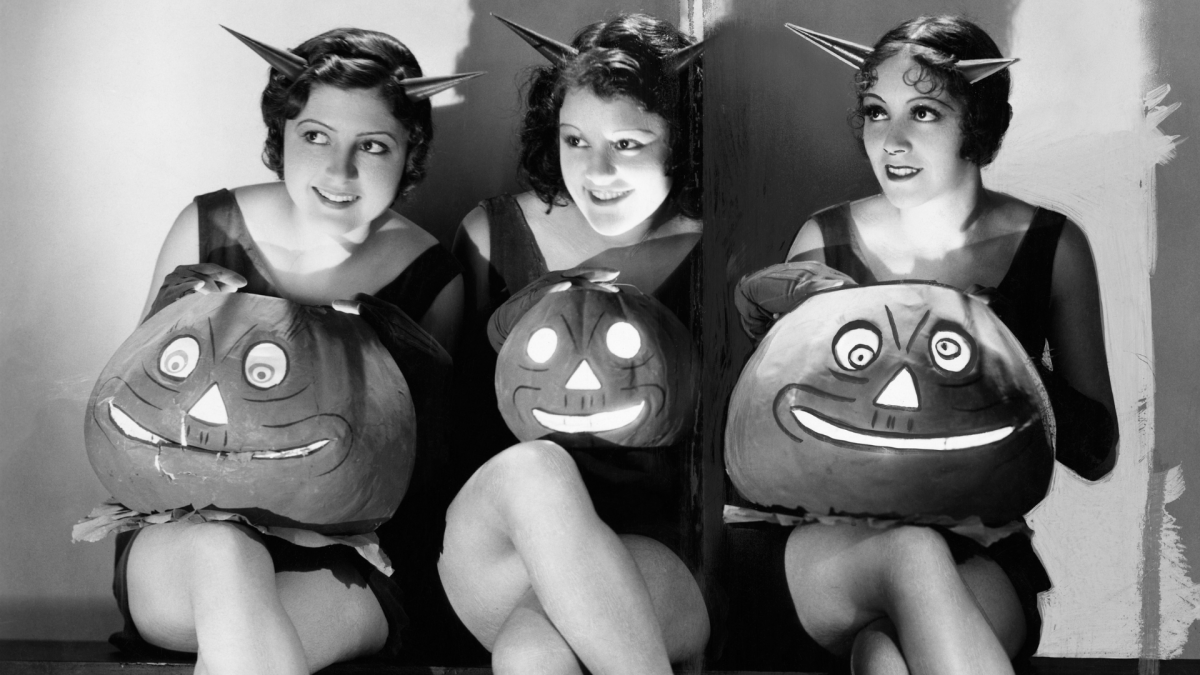
If you don’t like Halloween, we can’t be friends. I don’t care whether you celebrate with a drunken costume party, pumpkin carving, door-to-door candy begging, or a more personal observance like watching horror movies alone, but respect must be paid to the awesomest of all holidays. But where did Halloween come from, and how did it end up like the modern holiday we now celebrate?
The origins of Halloween are surprisingly slippery. Oct. 31 is next door to a Christian religious holiday, and it’s around “harvest time,” which might generally explain the date, but no one really knows why we put on costumes and beg for candy. There are a ton of theories describing how modern Halloween practices could have sprung from various ancient traditions, religious rites, or folk practices, but the first direct evidence of anything resembling modern “Halloween” is no older than the 1800s, and even then, it didn’t really take off for another 100 years.
Put succinctly, the history of Halloween as we know it is a muddy, confusing collection of practices that probably owe more to Peanuts comics published in the 1950s than Medieval Catholicism or pagan rites.
The theoretical history of Halloween
The most commonly repeated Halloween origin story says that the holiday began with the Samhain (pronounced sah-win or sow-in) celebrations of the Celts in Ireland, England, and Northern France. The date of Nov. 1 or Oct. 31 is about halfway between the autumnal equinox and winter solstice, and ninth century Irish literature describes gatherings and feasts marking Samhain, the day when ancient burial mounds were opened, and with them, portals to the Otherworld, the land of the Gods and the dead. Later, the theory goes, these practices were Christianized, renamed “All Hallow’s Day” and “All Hallow’s Eve” by the early Church, and that’s where we get Halloween. Sounds plausible enough…
…but it’s probably not what happened. The idea that Halloween comes from pagan rituals usurped by Christians originated with Welsh scholar Sir John Rhŷs, and he didn’t back up his theory with a ton of evidence. Some modern historians maintain that ties between Celtic celebrations and early Christian practices are tenuous, and medieval Christian festivals provide the real blueprint for the holiday. Medieval Christians celebrated All Saints’ and All Souls days during the observance of Allhallowtide—the time in the liturgical year dedicated to remembering the dead—by holding community feasts, emphasizing dead souls, and decorating skeletons. But they didn’t get that from the Celts, or so the theory goes.
Either way, both All Souls Day and Samhain likely have roots that go deeper than written history records. Harvest festivals were common in many places, and maybe they were like Halloween parties, but maybe they weren’t. We don’t know. The holiday takes place at the end of the harvest season and the beginning of winter, a time between life and death, when both Pagan and Christian minds turn toward the inevitable end of things. Halloween traditions seem to pay homage to that “between” place, and while we don’t know how much about how ancients celebrated “halfway between solstice and equinox day,” it probably wasn’t by dressing up and begging for treats.
Verified Halloween history
No matter where it started, by 835 AD, All Saints Day (Nov. 1) became an official Catholic day of obligation, and Allhallowtide practices like ringing church bells for souls in purgatory and black-clad criers taking to the streets to remind people to think of the dead are a little Halloween-like. If you squint.
Another tradition of the time was baking “soul cakes” in memory of the dead. This led to “souling,” where groups of children traveled from house to house asking for cakes in exchange for praying for the dead. Later soulers would carry carved lanterns made of hollowed-out turnips too. Is this the origin of “trick or treating” and Jack o’ Lanterns? Maybe…but again, probably not. It doesn’t seem like souling children wore costumes, even though “guising” or “mumming” (dressing in costumes and bothering your neighbors for treats and/or money) was practiced in various places in Europe during other holidays, particularly around Christmas.
Another theory for the origin of costumes for Halloween originates with the Late Medieval French tradition of the Danse Macabre—the dance of death. Perhaps in response to the Black Plague ravaging Europe, 14th century artists would depict the personification of Death surrounded by figures of a pope, an emperor, a king, a child, and a laborer—people from all levels of society—dancing toward the grave. Live versions of the Danse Macabre were enacted at village pageants, no doubt to the delight and horror of all. The grotesque but comical performance reminded people that Death would come for everyone, but also that we should have as much fun as possible before the inevitable, and there’s nothing more “Halloween” than that. But again, this is only a theory.
The origins of Halloween in America
In colonial America, Halloween was not widely observed. While New England Puritans generally frowned on anything fun like wearing costumes, dancing with Death, or carving pumpkins, more liberal colonists in New York, Maryland, and further south may have brought some Halloween-like activities over the ocean from their villages in Germany or Ireland. We don’t really know, but other than for a few pockets of diehards, maybe, celebrating Halloween wasn’t a thing in either the U.S. or Europe before the late 1800s.
The earliest American expression of Halloween-like activities performed in late October or early November came in the form of “play parties,” or Autumn festivals, to celebrate the harvest. These gatherings, immortalized in Washington Irving’s horror tale The Legend of Sleepy Hollow, often included ghost stories, attempts at divination, apple bobbing, pranks, and attempts to scare people—proto-Halloween activities, where you can see the holiday taking shape.
What do you think so far?
It wasn’t until the Irish mass immigration of the 19th century that we see Halloween celebrations labeled as such. Beginning around the 1850s, Irish immigrants fleeing the Potato Famine descended on the country. These immigrants brought Halloween celebrations to the U.S., but it doesn’t seem like they brought Halloween costumes or trick-or-treating.
The possible origins of trick-or-treating
All of our modern ideas that Halloween traditions came from this or that ancient practice could be examples of cherry-picking data to support the conclusion that our modern Halloween traditions have a deep lineage in the first place. But what if they don’t?
Trick-or-treating is the most well-known expression of Halloween, but, despite historic examples of costume-clad holiday revelers and/or people going to door to door to beg for treats on holidays, there doesn’t seem to be a direct link between any these older practices and modern trick or treating. Yes, it’s a little like souling, but no one in America seems to have ever practiced souling. There’s no evidence of anyone wearing costumes for Halloween in the U.S., the U.K., or Ireland before 1900 either, leading some Halloween scholars to suggest that American children developed trick-or-treating and costume-wearing independently of any older tradition. Which is actually the coolest theory: American kids made up Halloween from scratch.
The first mention of Halloween candy collection in costume comes from a newspaper in Kingston, Ontario in 1911, but the practice remained obscure enough that there’s no mention of anything like it in Ruth Edna Kelley’s 1919 history of the holiday, The Book of Hallowe’en, and there are no trick-or-treaters depicted in any of the many Halloween postcards printed in the 1920s. The practice doesn’t seem to have been widespread until the late 1930s, when the first mentions of it appears in a national publication, and it didn’t really take off until the early ’50s, when it appeared in a Peanuts comic strip and a Disney cartoon.
From there, everything we call “Halloween” comes into focus: The ghosts, the parties, the scares, the candy, all evolving from comic strips, movies, candy company advertising campaigns, and regular folks who seem to really enjoy dressing up in costumes.
Halloween: The people’s holiday
We ultimately don’t know much about the origin of Halloween because its meaning, and how we celebrate it, change constantly—it used to be a day for parties celebrating the harvest, during which people would read each other’s fortunes; then it became a day for kids to go trick or treating; then adults started using it as an excuse to dress in sexy Martha Washington costumes and get drunk. Parents got a freaked about razorblades in candy and invent “trunk-or-treating;” overly ambitious suburbanites started turning their homes into elaborate spook-houses; and on and on. No ancient pagan ritual needed, just folks figuring out what works for them.
Many other major holidays are rooted in religion or meant to commemorate a specific historical event—they’re top-down holidays, where the Pope or the government decreed that everyone would get a day off on this specific date, and observe it in this specific way. But Halloween is the people’s holiday, so there’s no official list of rules telling us how we’re supposed to commemorate it, or even any reason why we should be celebrating it. But every year we do anyway, perhaps due to a collective desire to get some candy or do something witchy before it gets too cold to go outside.