When you start
writing your CV
, one of the first decisions you’ll have to make is about which style you’ll choose. In most cases, a chronological CV (or more accurately, reverse-chronological CV) is the best fit. Making the right choice is important, because the order in which you present the information and the detail you go into will have an impact on the recruiter’s perception. First impressions count, so ensure that the reader can see at a glance why they’d want you in the role.
There are three main CV formats, each with their own advantages and disadvantages: the chronological CV, the skills-based CV, and a hybrid of the two. We’ll explore them in depth here, to help you to decide which is best for you. You’ll also need to
consider the layout
of your CV, so that the format complements the presentation.
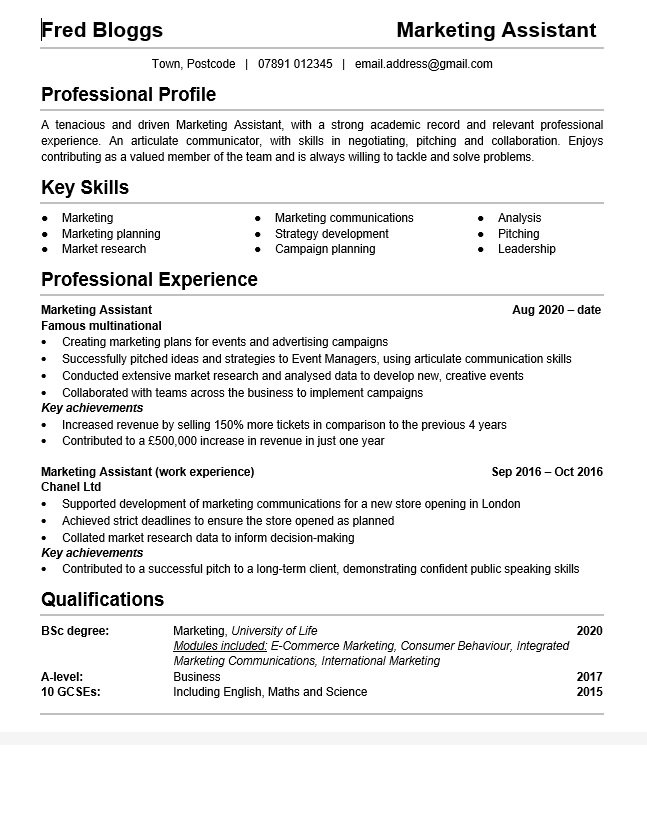
1. The chronological CV
The chronological, or reverse-chronological, CV does what it says on the tin. Your career and qualifications are presented in reverse chronological order, which usually means that the most relevant experience is at the top and is therefore the first thing the recruiter will read. Imagine applying for a position as a Chief Financial Officer, and the first thing the hiring manager finds out about you is that you had a paper round when you were 13!
“Recent” and “relevant”
are critical attributes for your CV.
The main benefit of a chronological CV format is that it makes it very easy for a recruiter to understand your career path and how your experience aligns with the position available. For this reason, it’s the most common type of CV and is generally considered the best CV format for most people.
It might not be right for you, however, if you are trying to hide something – a period of long-term unemployment, for example. This format could also be unsuitable for
career changers
, when the focus needs to be on transferable skills rather than industry experience.
Example of a chronological CV
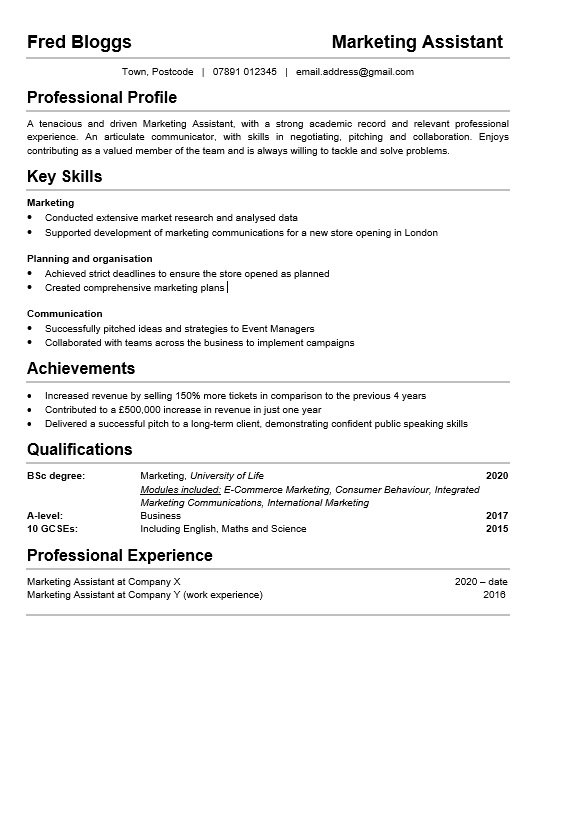
2. The Skills-Based (or Functional) CV
A skills-based CV, as you’d expect, places more focus on
skills
than experience. Instead of a short skills matrix, the Key Skills section can be expanded to include specific examples of when you’ve demonstrated each particular skill. The career history is then significantly condensed.
The advantage of using this format for your CV is that it’s great for highlighting specific skills up front and is therefore ideal for those wishing to
change career
. It also minimises the visibility of periods of unemployment or job-hopping.
Although a widely accepted CV format, the skills-based CV has the disadvantage that it can be difficult for hiring managers to tell which skills relate to which roles – and therefore how recently you’ve had experience in using that skill. It’s why they generally prefer a chronological CV.
Example of a skills-based CV
3. The hybrid (or combination) CV
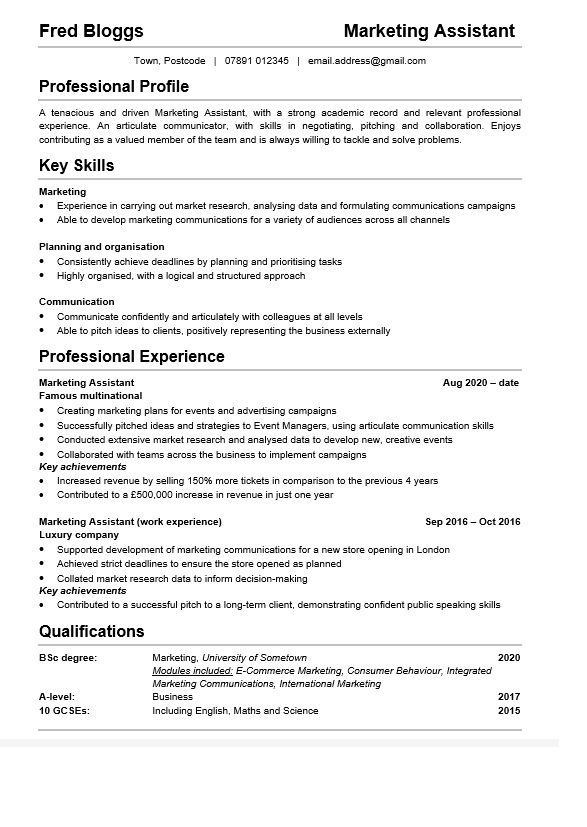
The hybrid CV, as its name suggests, combines the best of both the reverse-chronological and skills-based formats. It retains the longer skills section from the functional CV and also the detailed career history from the chronological CV.
This CV format can work well for career changers with a consistent career history, as it’s great for highlighting transferable skills and strengths whilst still showcasing career progression.
The main drawback is that it makes the CV much longer and you risk losing the hiring manager’s attention. Duplication of information is also a risk to be avoided.
Example of a hybrid CV
Other types of CV format
Recently, technology has enabled even the least technical among us to create new and exciting formats of CV. The
video CV
, infographic CV and webpage CV are all growing in popularity, but should be avoided unless specifically requested. They will rarely be the best CV format, as most employers like to store and sort CVs using an
applicant tracking system
and they’re not currently set up to parse this kind of information. They’re also hard to take into an interview!
Which is CV is best for me?
Hopefully the information above has given you a clear idea of which CV format will work best for you. If in doubt, the chronological CV is usually the best option, unless you’re in an exceptional situation. It’s what’s traditionally expected, and most UK recruiters don’t want high-tech CVs… yet!
Need help with your CV?
If writing your own CV seems too overwhelming,
Word Dragon can do it for you
! Make the most of my CV writing expertise to put your very best foot forward and land that next role sooner.
Contact me
to order or ask questions.
Updated 2026